


We’re thrilled to share that Nametag has been granted two additional patents for technologies which support keystone capabilities in the fight against AI-enhanced impersonation attacks by establishing and maintaining trusted links between real people and enterprise identities.
“Generative AI is making impersonation dramatically easier. Organizations can no longer assume that someone who appears to be an employee actually is one. They need a way to verify not just that someone is human, but that they are the right human.” — Aaron Painter, CEO of Nametag
Proving that the right person is behind the right identity
For years, enterprise cybersecurity has focused on verifying credentials and devices. But attackers increasingly succeed by exploiting a different gap: convincing organizations that they are legitimate employees by using generative AI and deepfakes to pose as someone else.
This shift is driving the emergence of a new security category focused on human identity verification: confirming that a real human (not a deepfake or AI agent) is present, and that the person onboarding, recovering, or requesting access to an enterprise account is really the legitimate individual in question.
Account binding: Are you the right person?
A standard identity verification (IDV) flow is simple: you scan a government-issued photo ID and take a selfie. This answers two questions: “Are you a real person?” and “Which person are you?” In a workforce context, however, IDV must also answer a third, critical question: “Is this the right person?”
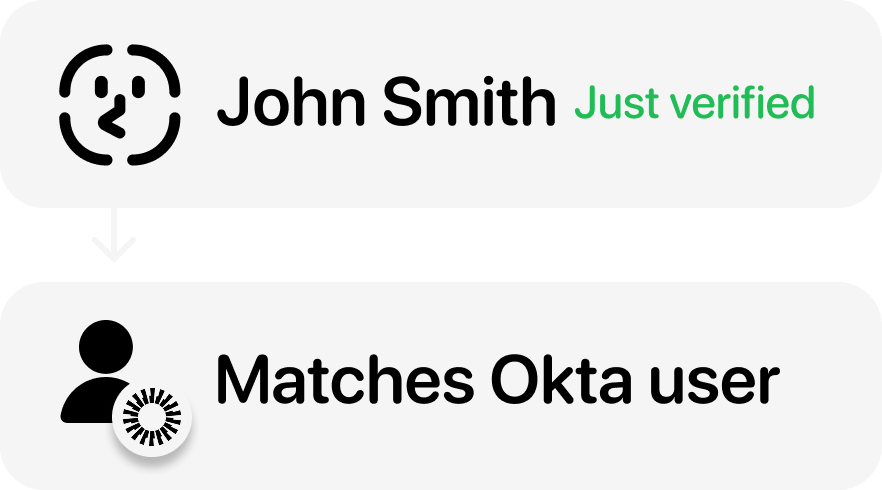
One of our newly issued patents relates to technologies that help securely associate a verified human with the correct account inside an enterprise’s identity systems. These capabilities support our Account Binding functionality, confirming that identity information obtained during verification matches the enterprise account being claimed.
Express reverification: Are you still the right person?
Establishing identity once is only the beginning. Organizations must also be able to maintain confidence that the same verified individual remains behind a digital identity over time, without adding undue friction for their employees.
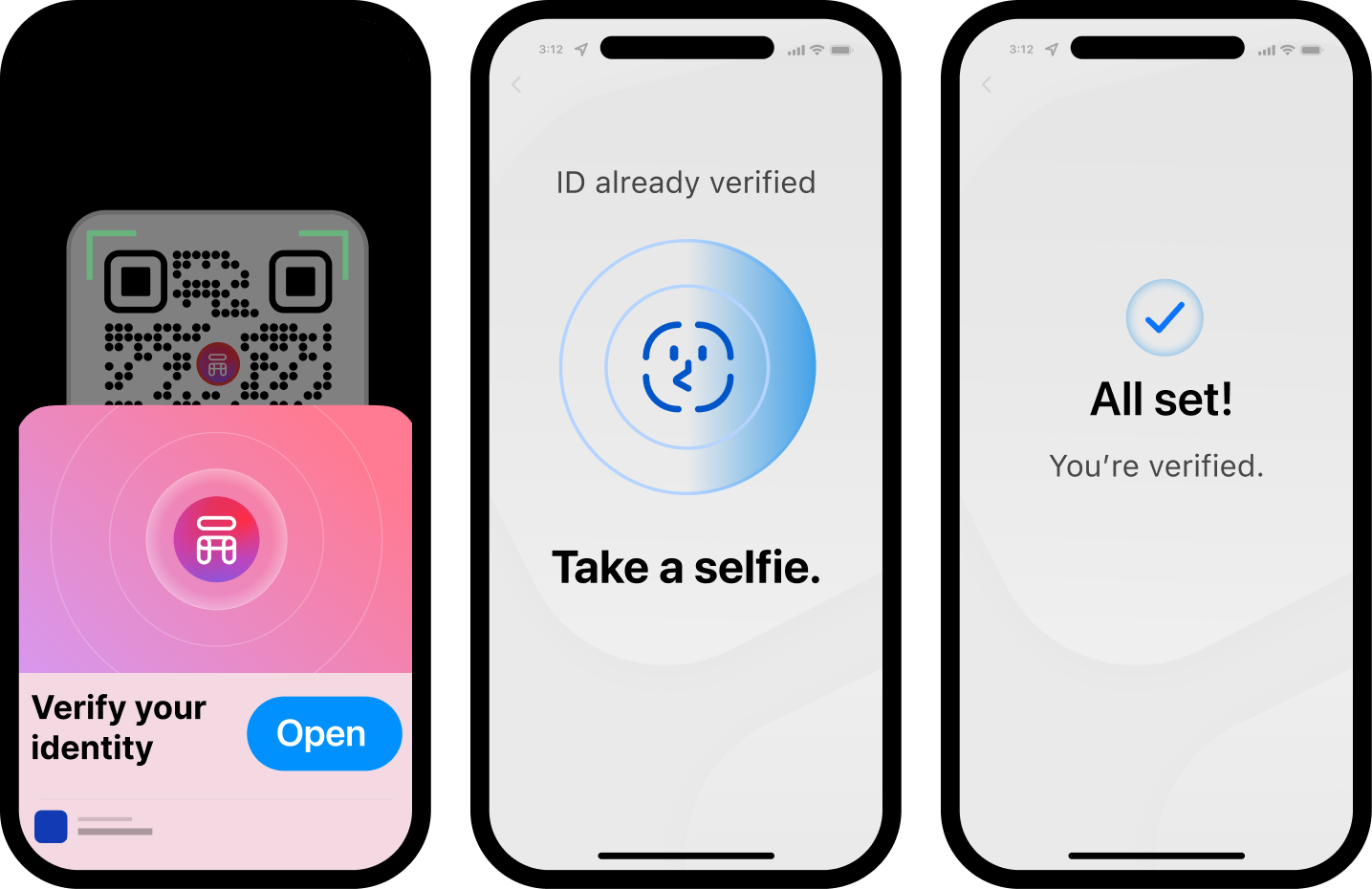
A second Nametag patent relates to technologies that allow previously verified individuals to confirm their identity again using only a selfie. We call these technologies Selfie Chaining™, which supports our Express Reverification feature. After an initial verification, a returning user can confirm their identity again in seconds while preserving the trusted connection between a real person and their enterprise identity.
“Verifying someone once isn’t enough for enterprise security. Organizations need a way to confirm that the same verified human remains behind an enterprise account across critical moments.” – Ross Kinder, CTO of Nametag
Building the foundation for the next layer of identity security
Together, these capabilities can also support emerging scenarios where employees verify their identity in order to securely approve actions performed by automated systems or AI agents acting on their behalf.
The patents reflect Nametag’s continued investment in technologies designed to protect organizations from AI-enhanced impersonation attacks. As enterprises adopt passwordless authentication and agentic AI, verifying the human behind enterprise accounts and the actions performed by AI agents is emerging as a foundational security layer alongside credentials, devices, and networks.
Prevent breaches and reduce IT support costs with Nametag
The 2026 Workforce Impersonation Report found that bad actors are posing as legitimate job candidates and employees to gain initial access. North Korean APTs are using AI to craft fake personas, then tricking you into hiring them for remote IT and security roles. Bad actors are going undetected within legitimate activity streams by taking over legitimate user accounts.
Identity is now the primary attack surface; identity verification is how you protect that surface.
Learn more about workforce impersonation in the 2026 Workforce Impersonation Report.
